What CaféRes Japan 2026 Says About the Future of Hospitality
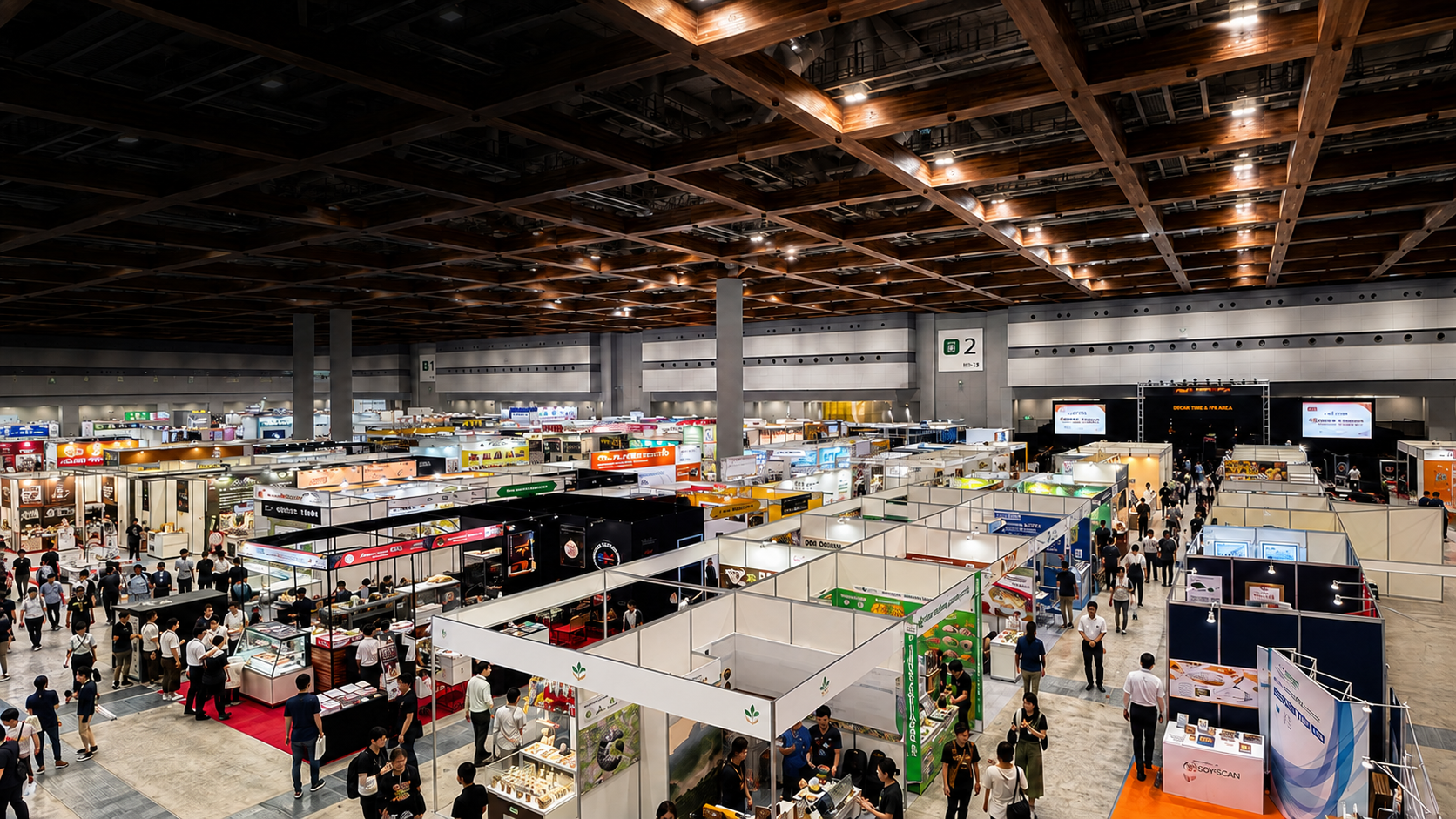
From service robots and compact equipment to playful food concepts and private-label products - a look at what stood out on the show floor in Tokyo.
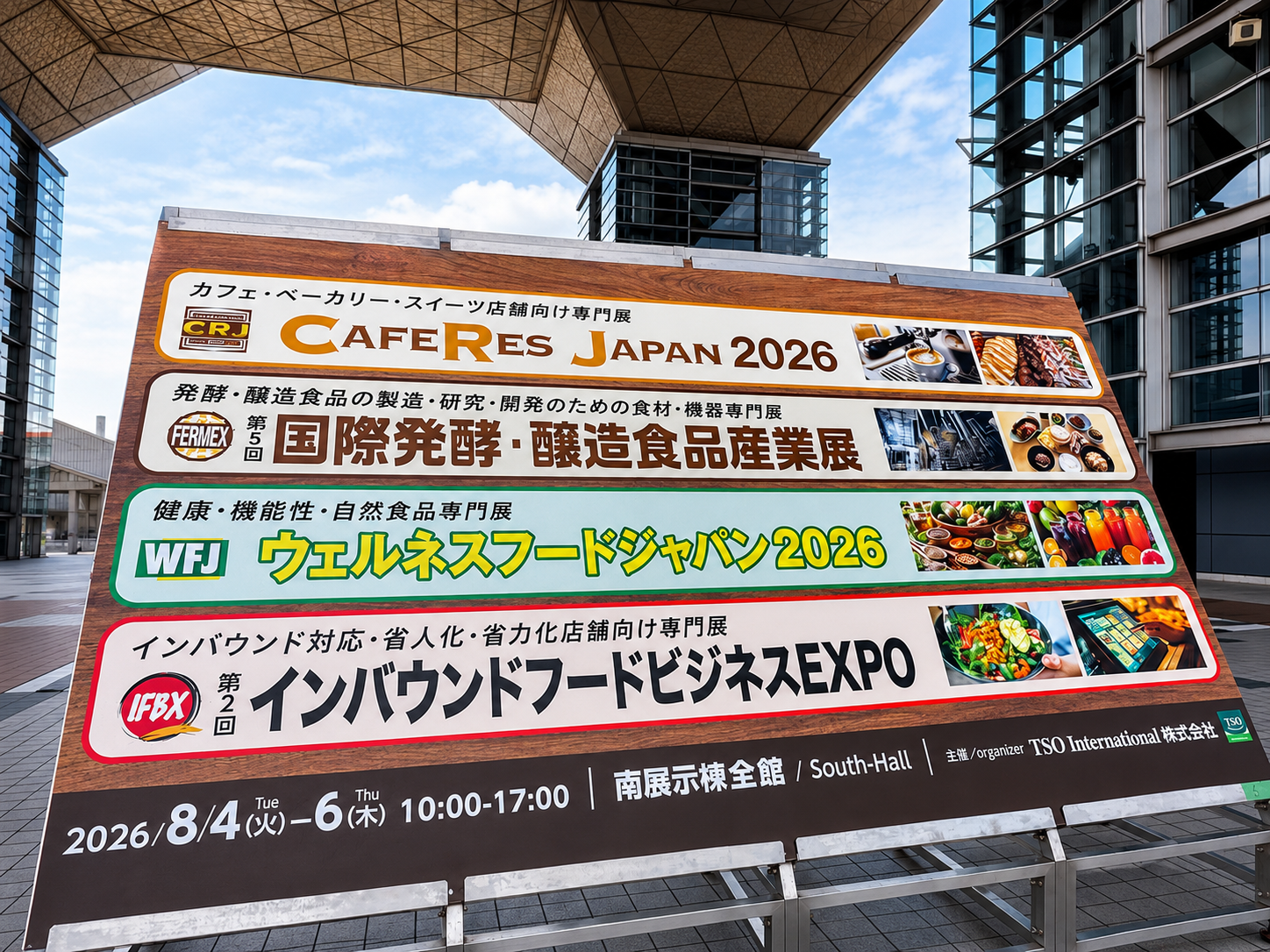
Tokyo’s hospitality trade shows are not particularly interested in subtlety.
You walk into CaféRes Japan and within a few minutes you are moving between industrial equipment, bakery displays, packaged ingredients, restaurant technology, tableware, food concepts and products you probably would not have thought to search for online.
Held at Tokyo Big Sight from August 4–6, CaféRes Japan 2026 brought several related exhibitions under one roof, covering cafés, bakeries, food manufacturing, wellness food and restaurant operations.
And while there was plenty to look at, a few themes kept appearing throughout the halls. Automation is moving from novelty to everyday restaurant equipment
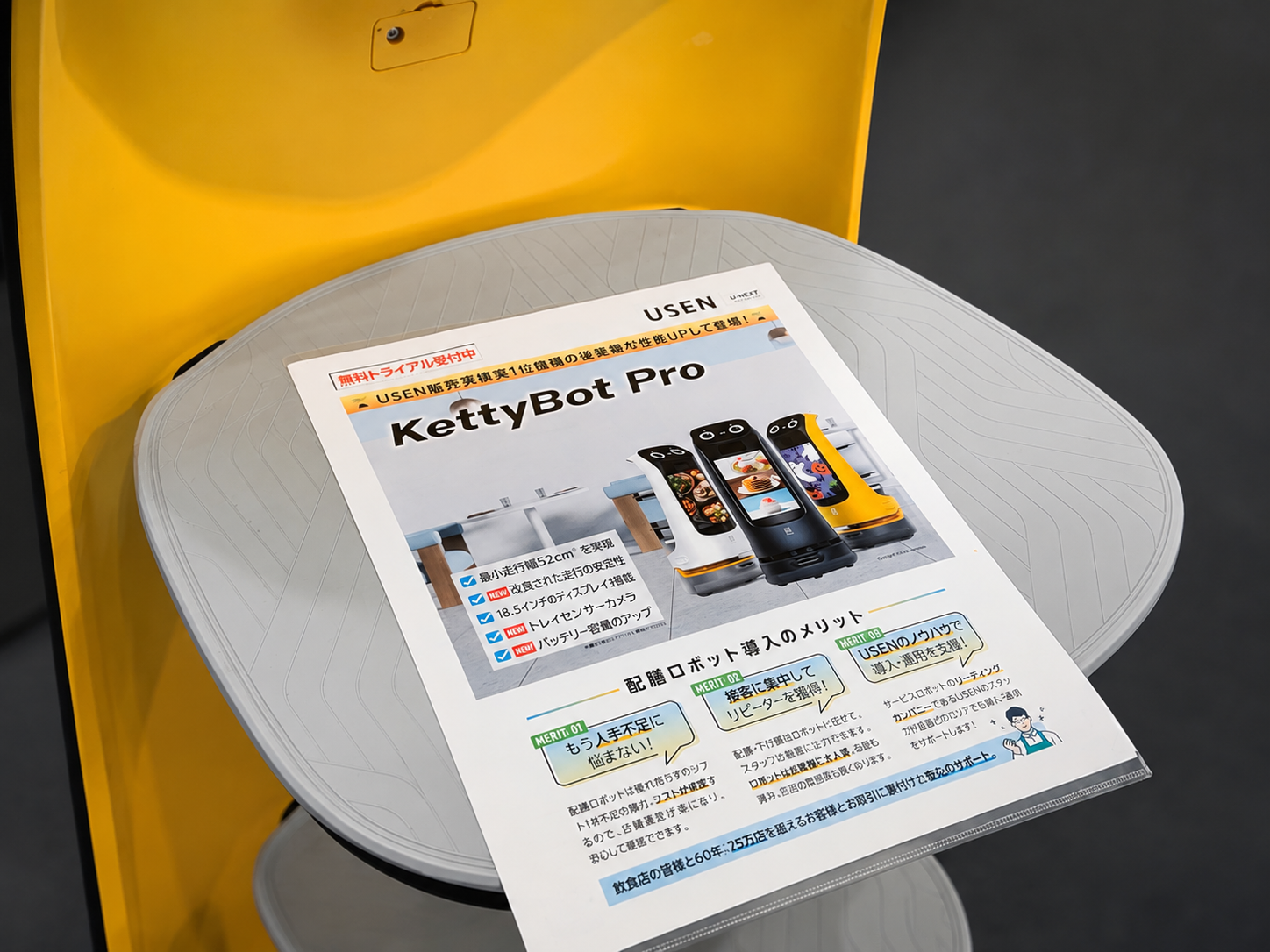
One of the clearest signals was how comfortably automation now sits alongside traditional restaurant equipment. Service robots no longer looked like futuristic prototypes placed at a show simply to attract attention. Products such as USEN’s KettyBot Pro were being presented as practical solutions to very ordinary hospitality problems: moving items around a restaurant, supporting staff and reducing the pressure created by labour shortages.
That distinction matters.
The most interesting hospitality technology is increasingly not technology that completely changes how a restaurant operates. It is technology that quietly removes repetitive work.
For operators facing staffing shortages and rising labour costs, that is arguably far more useful.
Suppliers are selling concepts, not just ingredients.
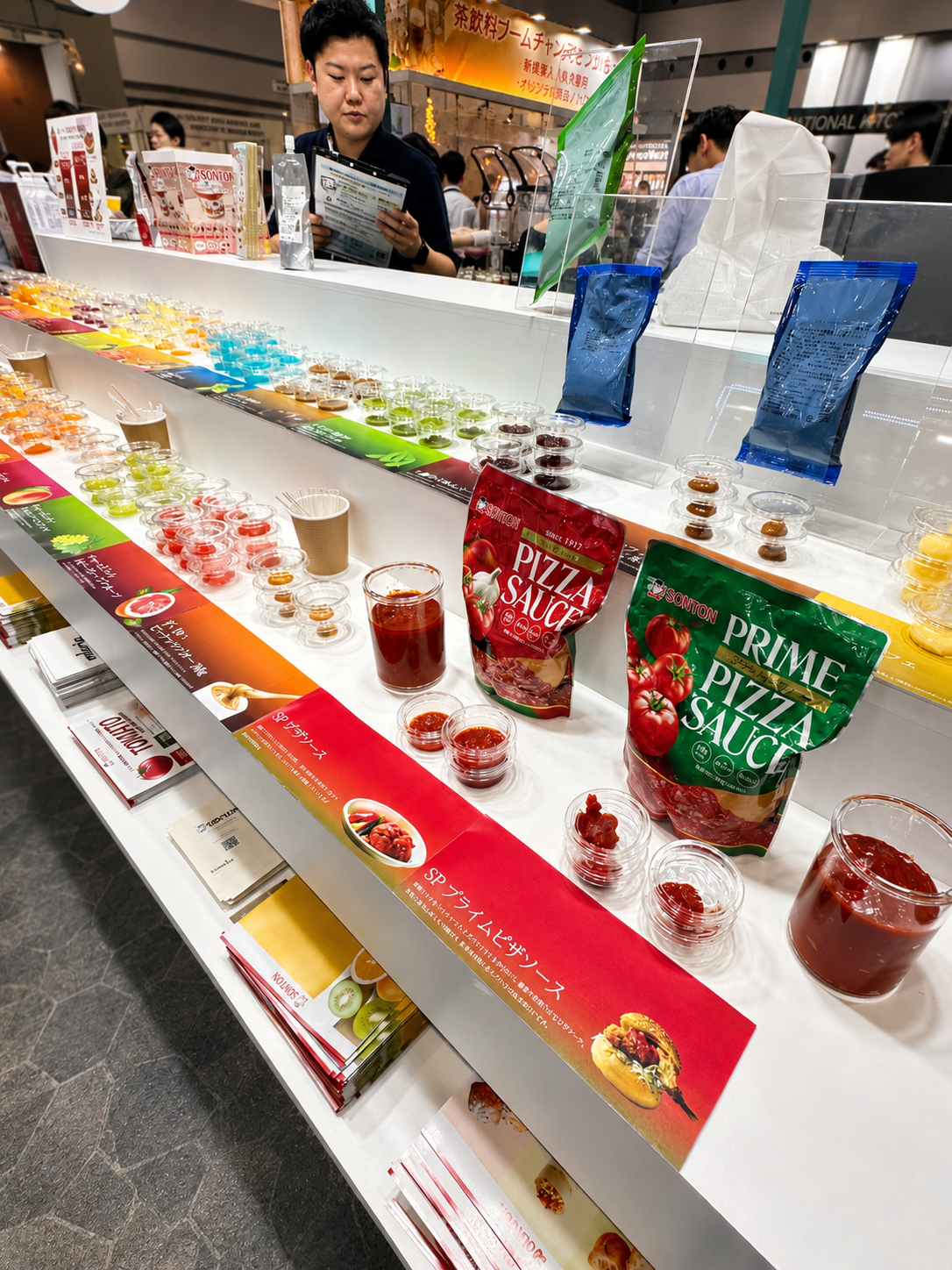
Food suppliers were another major part of the exhibition, but many stands were doing more than placing products on shelves. Sauces, pastes and ingredients were presented through possible applications, samples and finished menu ideas.
One display, for example, turned pizza sauces into a long tasting counter where visitors could compare different flavours and applications. Elsewhere, refrigerated displays presented pesto and other ready-to-use products in formats that could easily fit into restaurant or retail operations.
The message was fairly consistent: buyers increasingly want to understand not only what a product is, but what they can do with it.
For suppliers trying to sell into hospitality, that is an important lesson.
A jar of sauce is one thing. A jar of sauce shown as three possible menu items, with clear positioning and an operational use case, is much easier for a restaurant buyer to imagine purchasing.
Japanese food presentation still turns ordinary products into experiences.
Some of the most memorable displays were also the least technological.
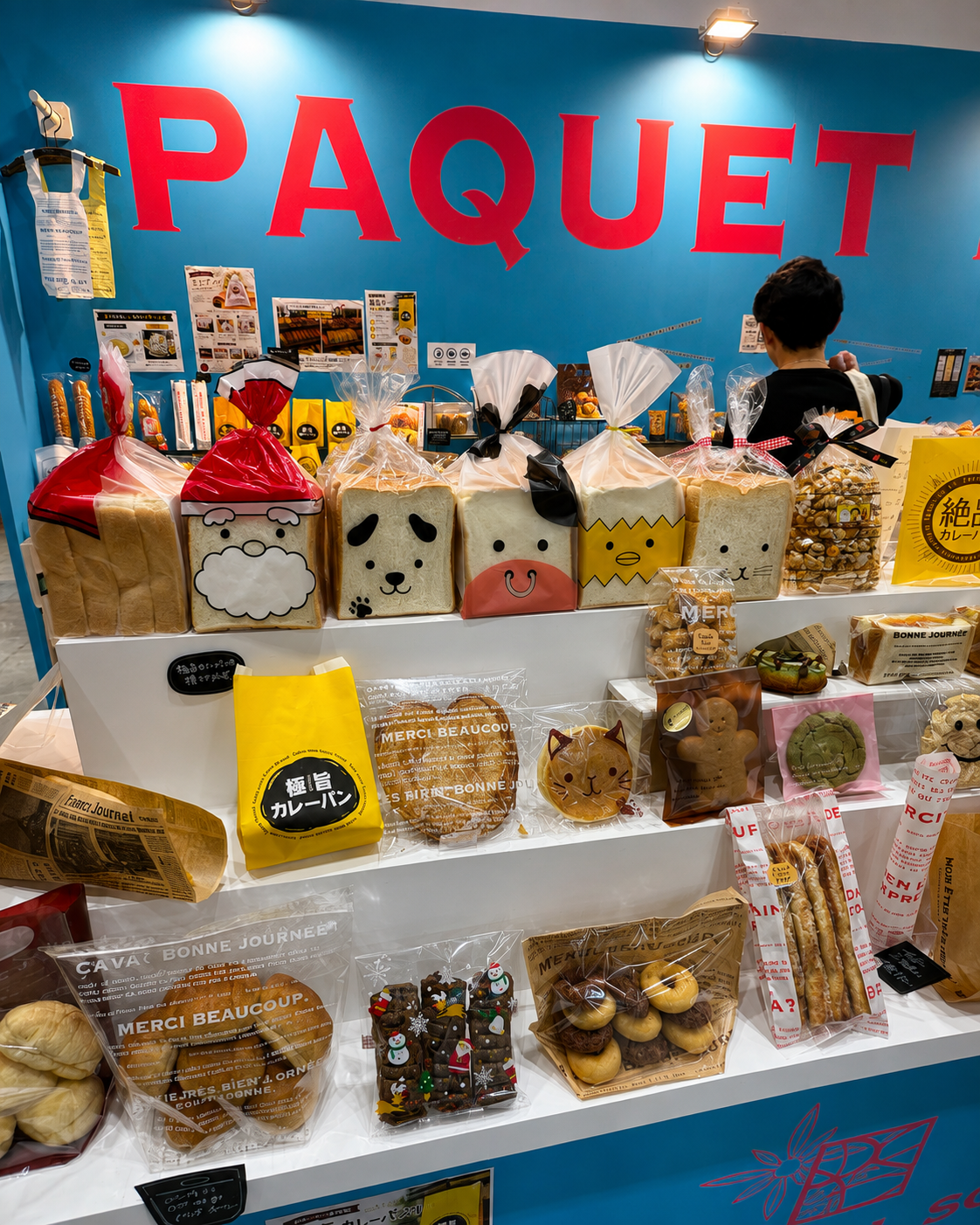
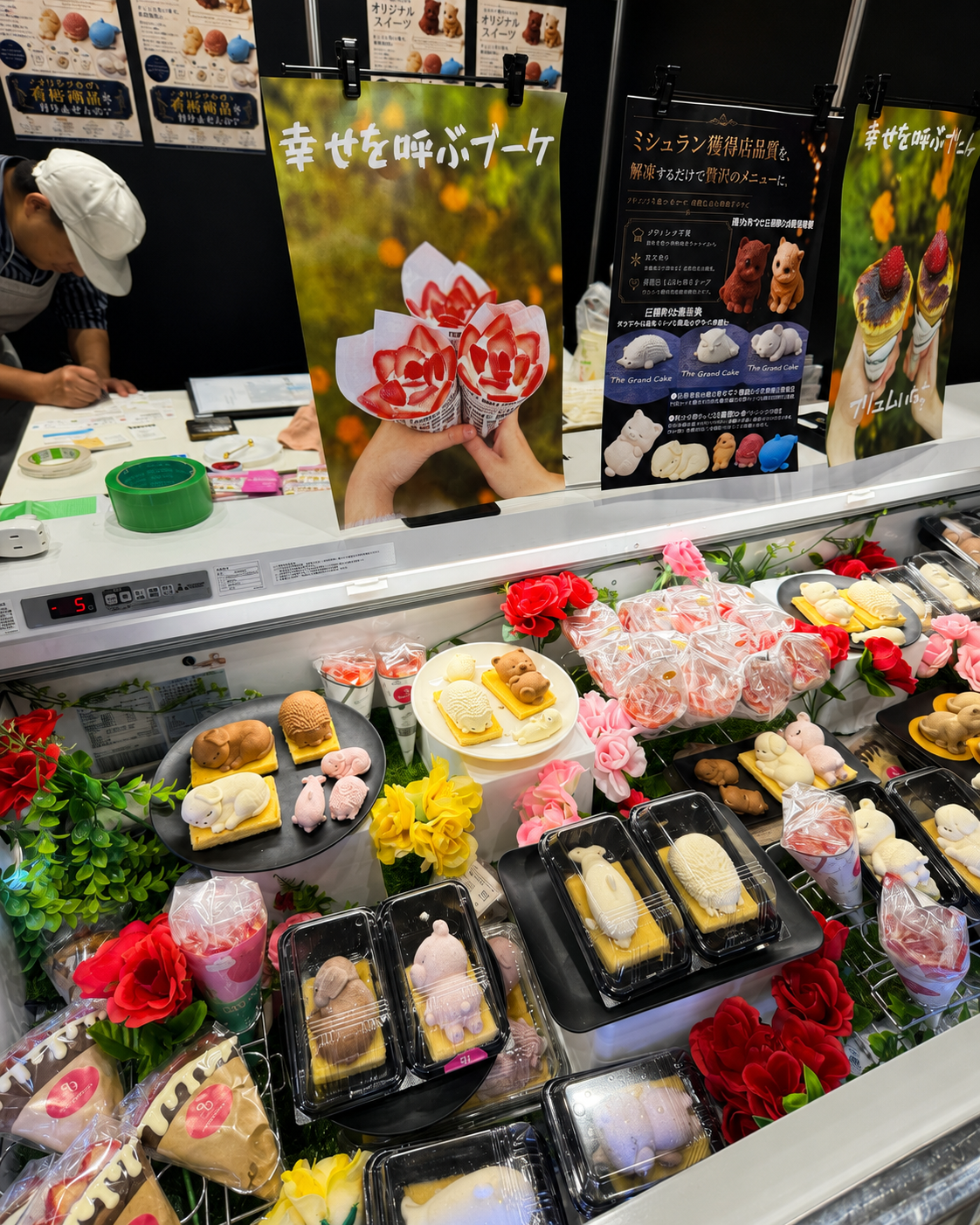
There were breads packaged as characters, colourful sweets arranged almost like small objects rather than desserts, and anko products presented through an entire gallery of flavours and possible applications.
This ability to turn a relatively simple food product into something highly visual was everywhere. At one bakery stand, loaves of bread were packaged with different faces and characters. At another display, small animal-shaped sweets were presented inside a refrigerated case surrounded by flowers and large photographic panels.
These are small details, but they point to something larger: in hospitality, presentation is increasingly part of the product itself.
A dessert that photographs well can travel far beyond the table it is served on.
There is still plenty of room for traditional craftsmanship.
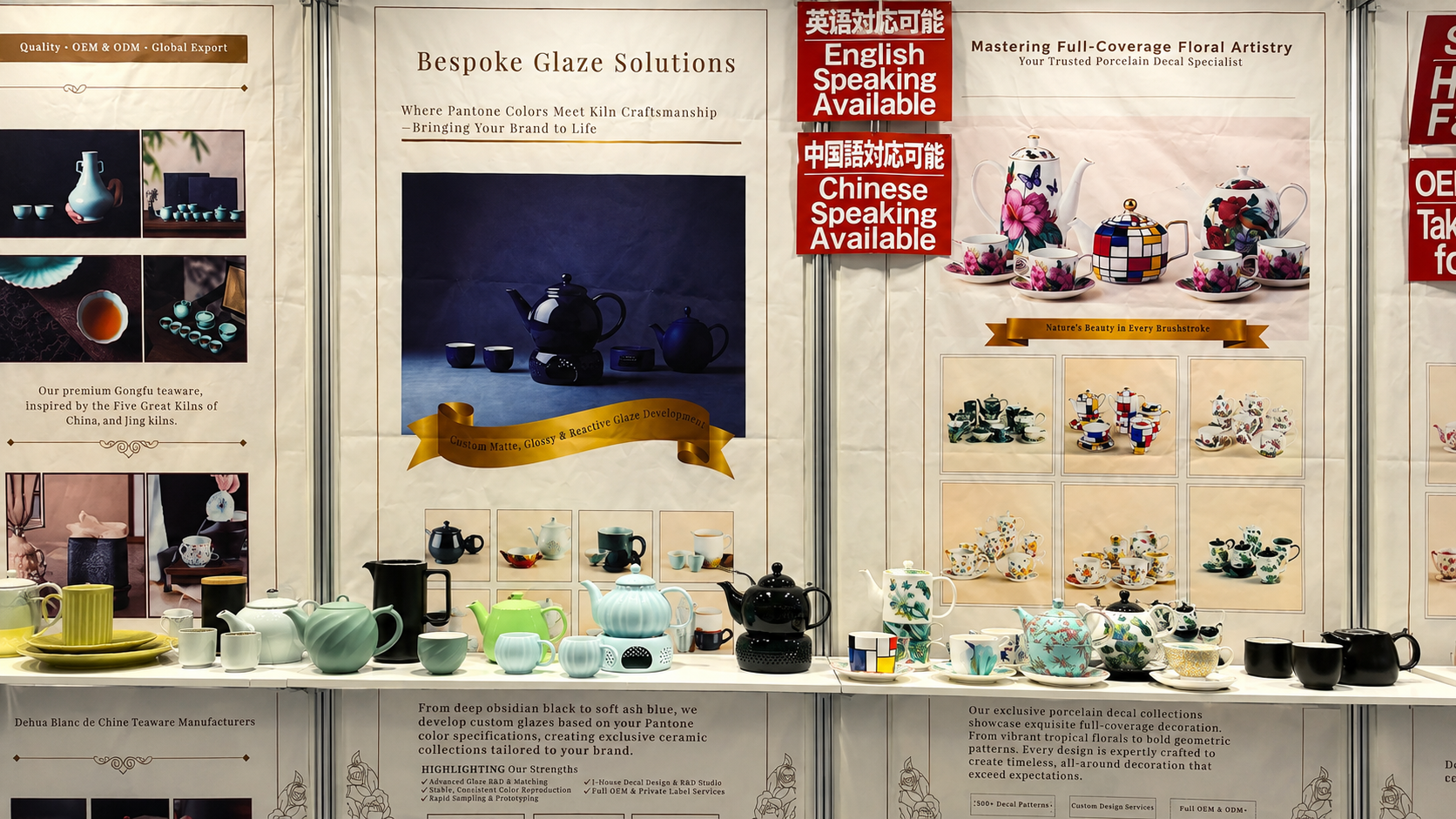
Not everything at CaféRes was about efficiency. Tableware exhibitors offered an interesting counterpoint to all the automation and food technology. One porcelain supplier displayed everything from minimalist monochrome tea sets to elaborate floral collections, while also promoting custom glaze development, OEM and private-label production.
For hotels, restaurants and hospitality brands, this side of the exhibition was particularly interesting. The ability to customise tableware, packaging or products makes it possible for relatively small hospitality businesses to build something that feels much more distinctive than simply purchasing from a standard catalogue.
It also reflects a broader shift in hospitality sourcing: businesses increasingly want products that contribute to their identity rather than disappear into the background.
Small manufacturers can be as interesting as the big stands.
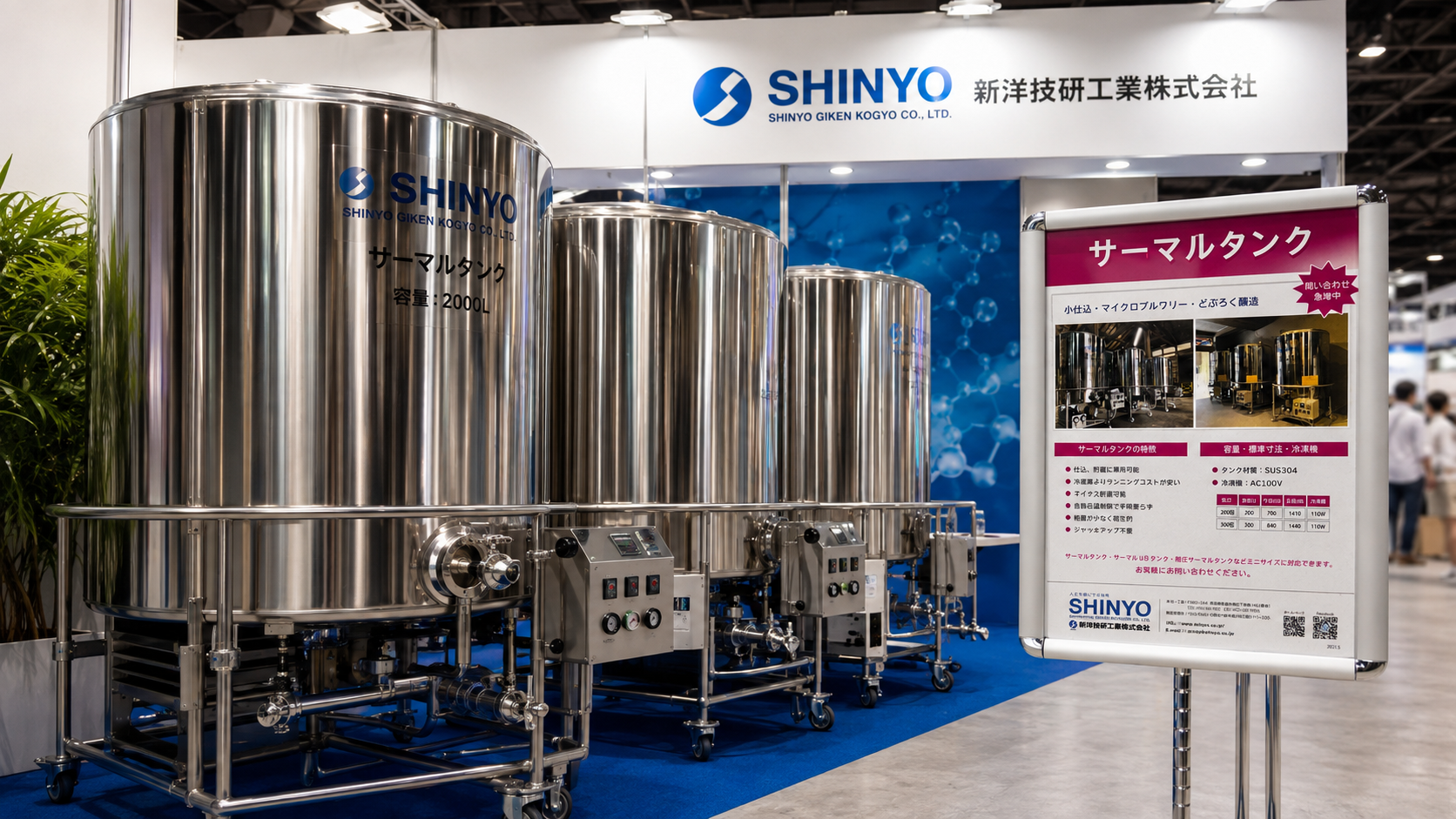
One of the advantages of walking a trade fair in person is that the most useful supplier is not necessarily the company with the largest booth. Smaller stands showed fermentation equipment, specialist ingredients, regional Japanese products and niche manufacturing solutions that would be very easy to miss in a conventional online search.
A small producer can sit only a few metres away from a large international supplier.
That makes trade fairs particularly useful for discovery.
Online sourcing tends to reward companies that already rank well, advertise heavily or sell through major platforms. An exhibition floor removes some of that hierarchy. You simply walk past the product.
Sometimes that is enough to find something you did not know you were looking for.
International suppliers were clearly looking at Japan too.
CaféRes was not exclusively Japanese.
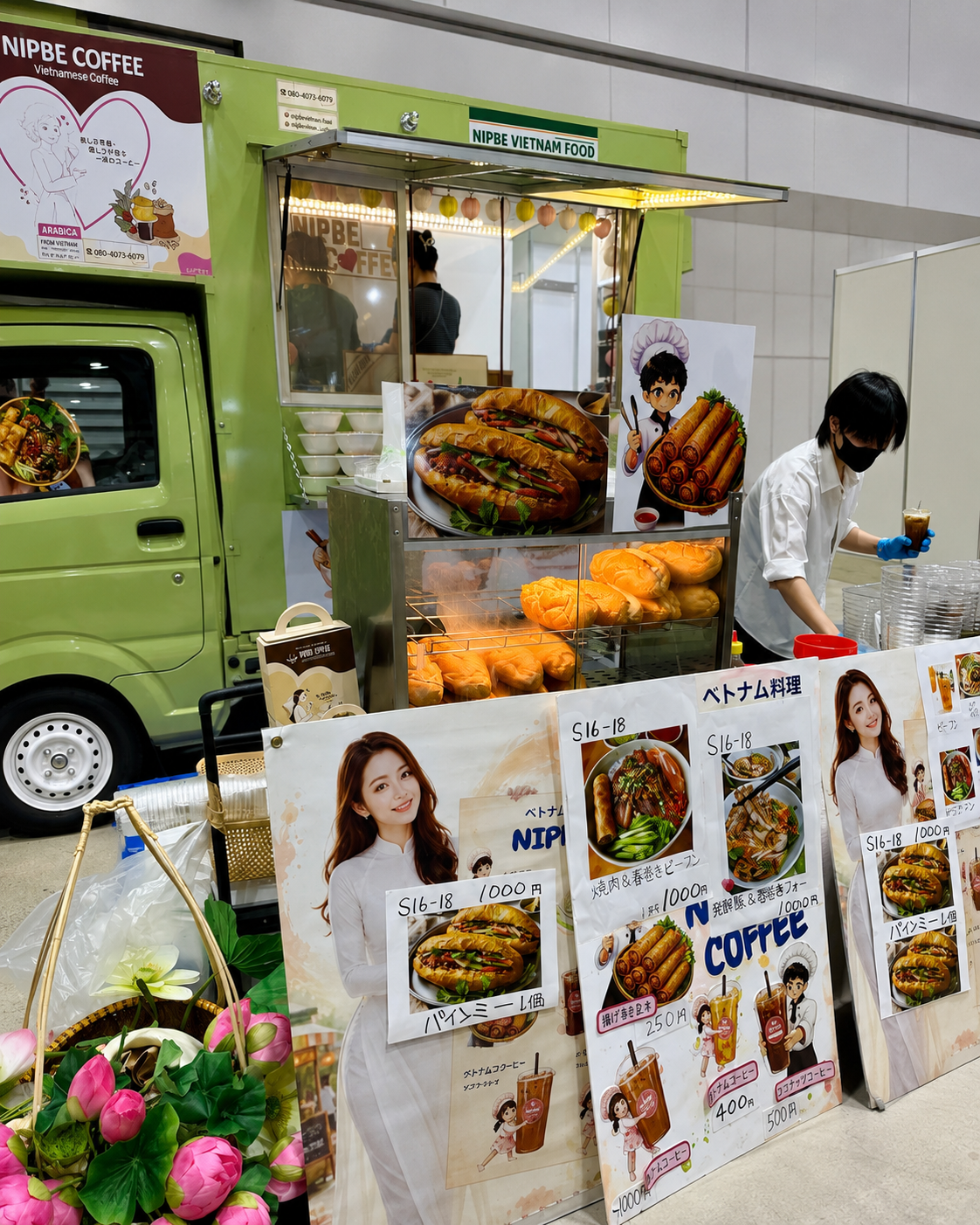
Vietnamese food concepts, Chinese tableware manufacturers and other international exhibitors appeared throughout the halls, often explicitly advertising English-speaking staff, OEM manufacturing or export capabilities.
That made the exhibition feel less like a purely domestic Japanese trade event and more like a meeting point between the Japanese hospitality market and suppliers trying to enter it.
For international buyers, the opposite opportunity exists as well.
A product discovered in Tokyo does not necessarily have to stay in Tokyo.
The bigger takeaway: hospitality sourcing is becoming fragmented.
Perhaps the most interesting thing about CaféRes Japan 2026 was not one individual product.
It was the sheer variety of problems being solved in the same building.
One restaurant may be looking for a delivery robot. Another needs a new sauce supplier. A hotel may be sourcing customised porcelain. A bakery could be looking for new packaging, equipment or ingredients. And each of those purchases currently tends to happen through a completely different network of manufacturers, distributors, exhibitions, catalogues and personal contacts.
Walking through a show like CaféRes makes that fragmentation very visible.
It also explains why hospitality procurement remains surprisingly difficult despite the size of the industry.
There is no shortage of suppliers. The difficult part is discovering the right one.
Final thoughts from Tokyo
CaféRes Japan 2026 offered a useful snapshot of where hospitality is heading.
Automation is becoming practical rather than experimental. Food manufacturers are thinking more carefully about how products translate into menus. Presentation is becoming part of product development. Custom manufacturing is becoming more accessible. And buyers are increasingly expected to discover products from suppliers far outside their own market.
But perhaps the strongest impression from the exhibition floor was simpler than that.
Hospitality remains an industry built from thousands of very specific products and very specific businesses.
Sometimes innovation is a robot moving through a restaurant.
Sometimes it is a better fermentation tank.
And sometimes it is simply a loaf of bread with a face on it.
That is precisely what makes walking a hospitality trade show interesting.